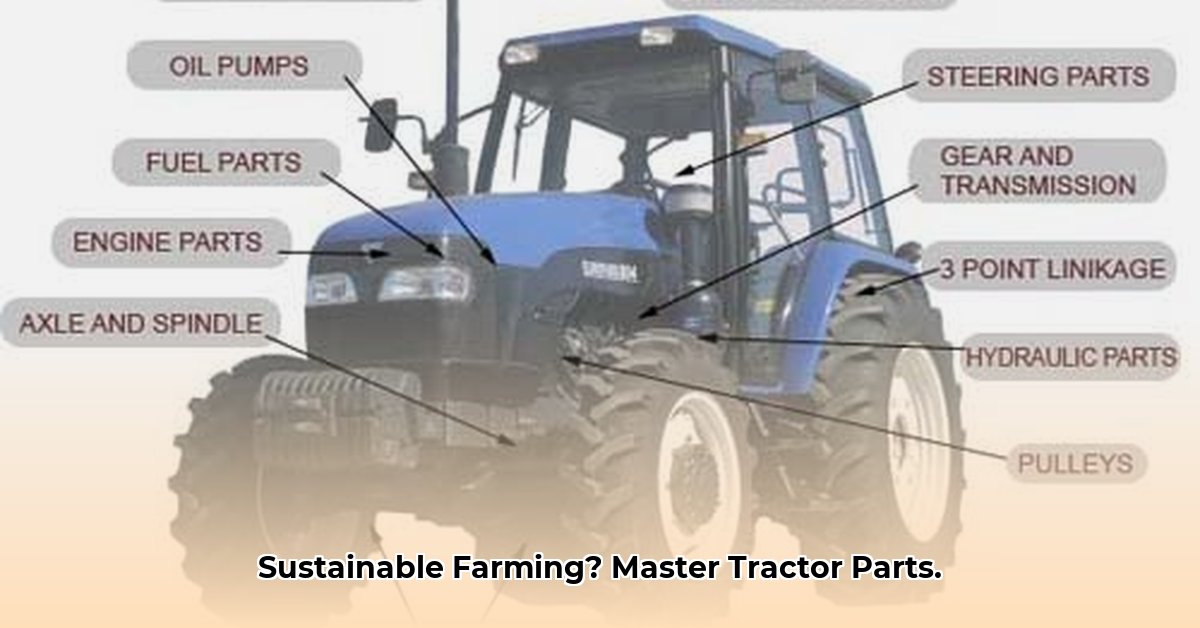
Parts of a Tractor: A Deep Dive into Sustainable Farming
Farming sustainably requires optimizing every aspect of the operation, and the tractor plays a pivotal role. This guide dissects key tractor components, explaining their function and impact on both performance and environmental sustainability. Understanding these mechanics empowers farmers to make informed decisions for a greener, more profitable future. For more information on sprayer tanks, check out this resource.
The Tractor Engine: Powering a Sustainable Future
The engine is the tractor's heart, the source of its power. While diesel engines have long dominated the market, sustainable agriculture demands a shift. Alternative fuels like biodiesel (a blend of vegetable oils and animal fats) and even hydrogen are emerging as viable options, promising reduced emissions. The ideal engine balances power with fuel efficiency and minimal environmental impact. However, a substantial knowledge gap exists regarding the long-term comparative costs (fuel, maintenance, etc.) of different engine technologies. More research is needed to provide conclusive recommendations. Dr. Anya Sharma, Agricultural Engineer at Purdue University, notes, "The transition to sustainable fuels requires comprehensive life-cycle assessments, considering not only fuel consumption but also the environmental impact of fuel production and waste disposal."
How can we accelerate the transition to more environmentally friendly tractor engines? This is a critical question for the future of sustainable agriculture.
The Clutch: Smooth Power Transfer for Efficiency
The clutch smoothly connects the engine's power to the wheels. A properly functioning clutch ensures smooth starts and stops, allowing the engine to operate at its most efficient speed. Regular maintenance minimizes wear and tear, significantly extending its lifespan and reducing repair costs. Neglecting clutch maintenance can lead to premature failure and costly repairs. Similar to a car, preventative care is essential. Regular inspection and servicing should be standard practice.
The Differential: Optimizing Traction and Fuel Economy
The differential distributes power between the tractor's wheels, crucial for maintaining traction on uneven terrain. Modern differentials often adjust power distribution automatically, optimizing traction and minimizing fuel waste from wheel slippage. This sophisticated technology contributes to both improved efficiency and reduced environmental impact.
PTO (Power Take-Off): Enhancing Attachment Efficiency
The PTO shaft powers implements like tillers, balers, and mowers. Optimizing PTO efficiency reduces fuel consumption during these operations, directly contributing to sustainable farming practices. Ongoing research focuses on designing more efficient PTO systems, promising further reductions in fuel use and overall environmental impact. The development of more efficient PTO systems is a significant step toward sustainable agriculture.
Tractor Weight and Soil Health: A Crucial Balance
Heavier tractors generally offer more power but contribute to soil compaction, hindering drainage and reducing crop yields. Lighter tractors minimize compaction, improving soil health. The optimal tractor weight depends on the specific application and soil conditions. Precision farming technologies, such as GPS-guided steering, further minimize soil disturbance by optimizing tractor movements.
Different Tractor Technologies: A Comparative Overview
Various technological advancements aim to enhance the sustainability of tractors:
| Technology | Advantages | Disadvantages | Environmental Impact |
|---|---|---|---|
| Diesel Engines | Powerful, readily available, relatively reliable | High emissions, high fuel consumption | High |
| Biodiesel Engines | Reduced emissions compared to conventional diesel, renewable fuel source | Potential for higher maintenance costs, biofuel availability | Moderately reduced, depending on biodiesel source and production |
| Hydrogen Fuel Cell Engines | Extremely low emissions, potential for high efficiency | High initial cost, limited infrastructure, hydrogen production | Very low |
| Lightweight Designs | Reduced soil compaction, improved fuel economy | Potentially lower power output | Reduced |
| Advanced PTO Systems | More efficient power transfer to implements, reduced fuel consumption | Higher initial cost | Improved |
The technological landscape is constantly evolving, with ongoing research shaping the future of sustainable tractor technology.
Taking Action for a Greener Future: A Collaborative Approach
Sustainable tractor use requires a multifaceted approach involving farmers, manufacturers, policymakers, and researchers:
- Farmers: Adopt fuel-efficient tractors, implement precision farming techniques, and maintain equipment regularly.
- Manufacturers: Invest in R&D for alternative fuel engines and lightweight tractor designs.
- Policymakers: Provide incentives for sustainable farming practices and set stricter emissions standards.
- Researchers: Conduct continuous research to evaluate different tractor technologies and farming methods.
This collaborative effort will be crucial for ensuring a future of sustainable agriculture. The journey towards greener farming practices involves ongoing innovation and concerted action across the entire agricultural ecosystem.
Comparing Diesel vs. Alternative Fuel Tractor Maintenance Costs: A Critical Analysis
Maintaining a tractor is a substantial expense. Several factors affect costs, including tractor size, age, usage, fuel type, and transmission. While diesel engines offer potential long-term fuel economy benefits at high usage hours, alternative fuels represent a compelling sustainability argument, though their infrastructure and availability are still developing. A comprehensive analysis considering all factors is crucial for cost-effective and environmentally conscious decision-making. Detailed long-term studies are needed to compare maintenance costs across different fuel types and tractor models, considering repair frequency, parts availability, and labor costs. The currently available data is insufficient to provide definitive conclusions on the matter.
Key Takeaways:
- Tractor maintenance is a significant operational cost.
- Fuel type and usage intensity substantially impact operational expenses.
- Preventative maintenance strategies minimize long-term costs.
- A holistic approach, considering all relevant factors, is critical for informed decision-making.
- Further research is desperately needed to provide reliable cost comparisons across various tractor technologies and fuel types.